Is Chinese square dancing actually good exercise? The short answer is yes — but the evidence is more interesting than the usual list of “six amazing health benefits.”
Guangchangwu, or Chinese public square dancing, is a form of group physical activity that combines rhythmic movement, aerobic exercise, coordination, repeated choreography, and social interaction. Research involving Chinese older adults has reported improvements in physical function, blood pressure, mood, wellbeing, and quality of life.
But that does not mean every health claim made about square dancing is proven.
A 2026 randomized controlled trial of 150 community-dwelling adults aged 60–79 found that a 12-week square-dance program improved six-minute walking distance, balance performance, flexibility, blood pressure, depressive symptoms, anxiety, wellbeing, and health-related quality of life compared with a health-education control group. At the same time, broader research on dance in general finds much weaker evidence for preventing falls, improving bone density, or preventing dementia.
So this guide takes a deliberately conservative approach.
It separates what research directly supports, what has promising but limited evidence, what remains uncertain, and what should not be claimed without stronger evidence.
What Kind of Exercise Is Guangchangwu?
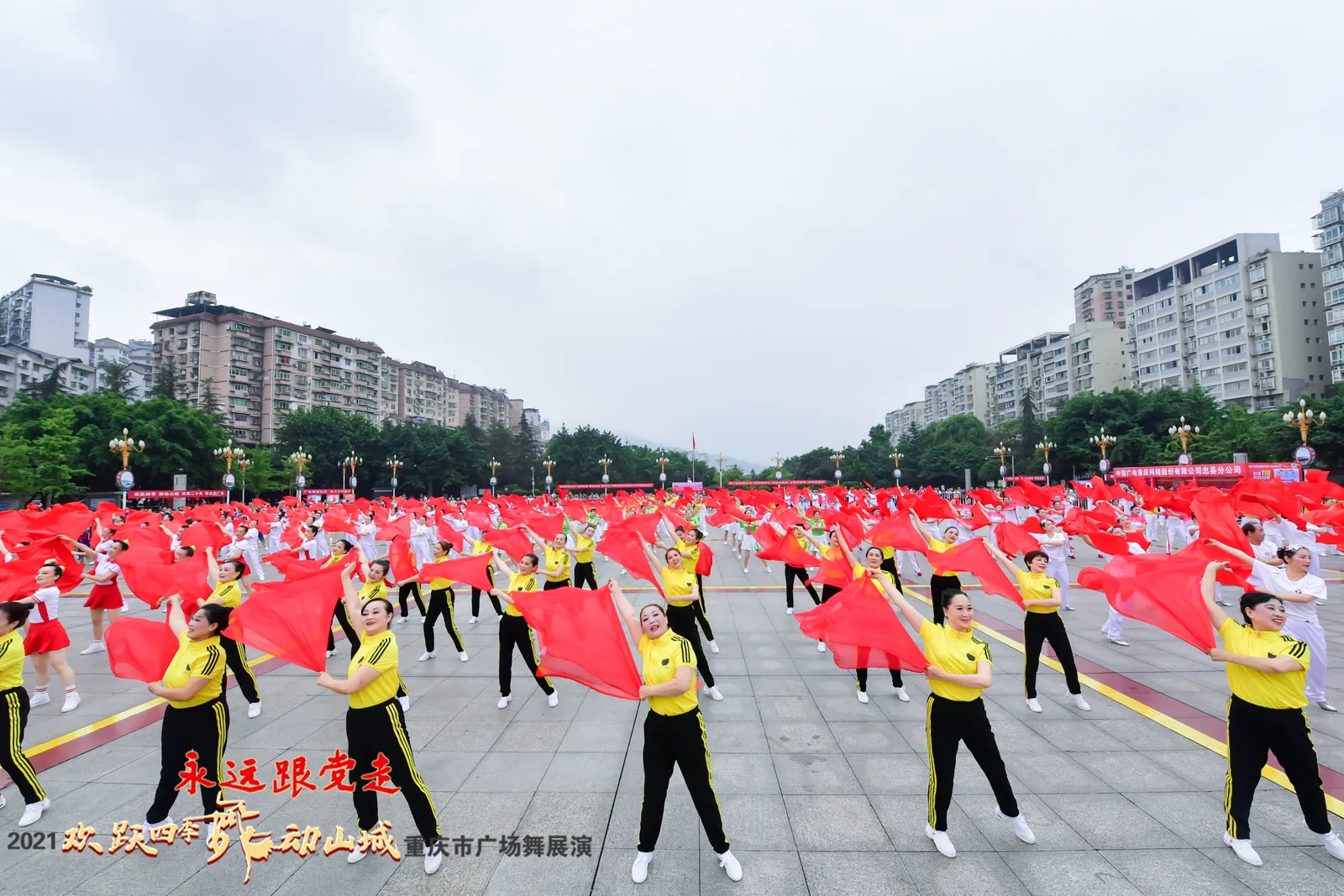
An outdoor session: continuous, moderate-intensity movement in a group.
Guangchangwu is not one standardized exercise program.
The term covers a wide range of group routines performed to music in public squares, parks, community spaces, and other outdoor areas.
Some routines are gentle and repetitive.
Others are faster, involve larger movements, turns, squats, or more demanding footwork.
That means the health effect depends partly on how the dance is performed — the same point the movement layer makes about rhythm, weight shifting, and repetition.
It can provide moderate-intensity physical activity
The World Health Organization includes dancing among activities that can provide moderate-intensity physical activity, although the actual intensity depends on the person and the activity. WHO’s guidelines recommend that older adults accumulate at least 150–300 minutes of moderate-intensity aerobic activity per week, together with muscle-strengthening activity on at least two days and multicomponent activity emphasizing balance and strength on at least three days.
A standardized compendium of physical activities lists Chinese square dance at approximately 5.5 METs for a moderate form and Chinese square dance performed aerobically at approximately 7.3 METs. These are reference values, not measurements for every guangchangwu routine.
That distinction is important.
There is no single “square dance intensity.”
A slow routine and a vigorous routine can place very different demands on the body.
What does 5.5 METs mean?
A MET is a way of expressing energy expenditure relative to resting metabolism.
For illustration, if a 60-kg person performs an activity rated at 5.5 METs for one hour, a simple MET calculation gives approximately:
5.5 × 60 × 1 = 330 kcal/hour
But this is an estimate of energy expenditure, not a promise that every dancer will burn 330 calories.
Actual expenditure varies with:
- body weight;
- age;
- fitness;
- movement size;
- dance style;
- pace;
- rest periods;
- and individual efficiency.
For the same reason, calorie calculators should be treated as estimates rather than measurements.
The talk test is often more useful than a target heart rate
For beginners, you do not necessarily need to calculate a precise maximum heart rate.
A practical intensity check is the talk test.
If you can speak in short sentences but would find sustained singing difficult, you are generally working around a moderate level of effort.
If you cannot comfortably speak at all, the intensity is considerably higher.
The appropriate intensity still depends on the individual’s health and fitness.
How Strong Is the Evidence?
Before looking at individual benefits, it helps to understand what the studies actually tell us. Every study named in this article is listed in the sources index alongside the rest of this site’s evidence base.
Randomized controlled trial
An RCT randomly assigns participants to different interventions or comparison groups.
This can provide stronger evidence about whether an intervention itself caused an observed difference.
Systematic review
A systematic review collects and evaluates studies addressing a defined question.
Its strength depends on the quality and consistency of the studies it includes.
Meta-analysis
A meta-analysis statistically combines results from multiple studies.
A large meta-analysis does not automatically mean strong evidence.
If most underlying studies are small or have a high risk of bias, the combined estimate can still be uncertain.
Network meta-analysis
A network meta-analysis can compare several interventions, including some that have not been compared directly in the same trial.
That makes it useful, but rankings such as SUCRA should not be interpreted as absolute proof that one activity is universally “best.”
What about the square-dance literature?
A 2022 systematic review identified 24 studies examining square-dance interventions among older Chinese adults. The authors found evidence of physical, mental, and cognitive improvements, but also reported that the included studies had a moderate-to-high risk of bias.
That is exactly why the newer RCT is important.
It improves the direct evidence base — but it does not erase the limitations of the earlier literature.
What Does the Best Direct Evidence Show?
One of the most important recent studies is a 2026 randomized controlled trial published in Frontiers in Public Health.
The study included 150 community-dwelling adults aged 60–79.
Participants were randomly assigned to:
- a square-dance intervention group;
- or a health-education control group.
The square-dance group participated in:
3 × 60-minute sessions per week for 12 weeks.
Researchers measured physical function, blood pressure, mood, wellbeing, and quality of life.
The results were notable.
Compared with the control group, the square-dance group improved by:
| Outcome | Between-group difference |
|---|---|
| Six-minute walk distance | +41.5 m |
| Timed Up and Go | −1.05 s |
| Flexibility | +3.2 cm |
| Systolic blood pressure | −3.8 mmHg |
| Diastolic blood pressure | −2.4 mmHg |
| GDS-15 depressive symptoms | −1.5 points |
| GAD-7 anxiety | −1.2 points |
| WHO-5 wellbeing | +3.8 points |
| SF-12 physical component | +3.1 points |
| SF-12 mental component | +3.4 points |
Adherence was reported at 87%, and no serious adverse events were reported during the intervention.
The primary physical outcome, the six-minute walk test, showed a between-group difference of 41.5 meters with a 95% confidence interval of 30.9–52.1 meters.
What does this study actually prove?
It provides good direct evidence that this particular 12-week square-dance program can improve several measured physical and psychological outcomes in community-dwelling adults aged 60–79.
It does not prove that:
- every form of guangchangwu produces the same effects;
- everyone will experience the same improvements;
- square dancing prevents cardiovascular disease;
- square dancing prevents dementia;
- square dancing prevents falls;
- or square dancing is better than every other form of exercise.
Those are different questions.
Health Benefits With the Best Direct Support
Cardiovascular and functional fitness
The strongest recent direct evidence is for improvements in functional aerobic capacity and physical performance.
The 2026 RCT found a 41.5-meter greater improvement in six-minute walking distance compared with the health-education group.
The study also found modest reductions in systolic and diastolic blood pressure.
That is consistent with a broader principle in exercise science:
regular physical activity can improve cardiovascular and functional health.
But it would be incorrect to turn one 12-week trial into the claim that guangchangwu “treats hypertension.”
The safer statement is:
Regular square-dance participation can contribute to physical activity and may improve some cardiovascular and functional measures, with recent direct evidence showing modest blood-pressure improvements in older adults.
Flexibility, Mobility and Physical Function
The 2026 RCT also found an improvement in a sit-and-reach flexibility measure and a modest improvement in the Timed Up and Go test.
This makes intuitive sense.
Many guangchangwu routines repeatedly require:
- stepping;
- weight shifting;
- turning;
- reaching;
- coordinated arm movements;
- changes in direction;
- and memorized movement sequences.
These demands are different from simply walking in a straight line.
But again, the effect depends on the choreography. A gentle routine should not be assumed to provide the same training stimulus as a vigorous routine involving larger movements — see how routines differ from one another.
Balance: Promising, But Don’t Call It Fall Prevention
This is one of the most important distinctions in the entire article.
The 2026 RCT found an improvement in the Timed Up and Go test.
That is encouraging.
But an improvement in a balance or mobility test is not the same thing as proving that fewer people actually fall.
A 2024 systematic review and meta-analysis examined 41 studies involving 2,451 older adults and evaluated dance interventions for fall prevention.
The researchers found no significant differences in several functional outcomes, including Timed Up and Go and Berg Balance Scale, and rated the overall certainty of evidence as very low. They concluded that there was not robust evidence showing that dance prevents falls.
So two statements can both be true:
Square dancing may improve some measures of balance and mobility.
and
We do not yet have strong evidence that square dancing reduces actual fall incidence.
That is a much more useful conclusion than either “square dancing prevents falls” or “square dancing does nothing for balance.”
Blood Pressure and Metabolic Health
The recent RCT provides direct evidence of modest blood-pressure improvement after 12 weeks of structured square dancing.
Older literature has also investigated square dancing among people with metabolic conditions, including type 2 diabetes.
However, many of these studies are small and come from a research environment in which study quality varies.
The 2022 systematic review of square-dance interventions specifically warned that the available literature had moderate-to-high risk of bias.
Therefore, the evidence supports a relatively conservative statement:
Square dancing can be a useful form of regular physical activity for people seeking to improve overall fitness and metabolic health, but it should not be presented as a stand-alone treatment for diabetes, hypertension, or metabolic disease.
For someone with a chronic condition, the appropriate exercise intensity depends on the condition, medication, fitness level, and medical advice.
Mental Health: There Is Real Evidence, But It Is Not a Depression Treatment
This is another area where the evidence is genuinely interesting.
The 2026 RCT found improvements in:
- depressive symptoms;
- anxiety;
- wellbeing;
- and both physical and mental components of health-related quality of life.
A separate 2025 network meta-analysis examined 13 studies involving 1,083 older adults and found that Chinese square dance was associated with improvements in depression, anxiety, and wellbeing compared with control conditions. It found no significant difference in cognitive function.
For Chinese square dance specifically, that is meaningful evidence.
But there is an important boundary.
Feeling better is not the same as treating major depression
A 2026 network meta-analysis of mind-body exercise interventions in older adults included 23 RCTs and reported SUCRA values of:
- Tai Chi: 83.3%
- Pilates: 71.0%
- Yoga: 66.3%
- Qigong: 59.4%
- Square dancing: 26.8%
The authors themselves caution that several comparisons had confidence intervals crossing the null and that some intervention categories were supported by only a small number of trials.
So this ranking should not be interpreted as “Tai Chi is medically better than square dancing for everyone.”
What it does tell us is that the evidence base for different exercise modalities is not uniform.
And most importantly:
square dancing should not be presented as a replacement for professional treatment of clinical depression.
What About Cognition and Dementia?
This is where online health articles often move much faster than the evidence.
There are plausible reasons why dancing could engage the brain.
Learning choreography requires:
- attention;
- working memory;
- motor planning;
- spatial awareness;
- rhythm;
- sensory integration;
- and repeated recall.
Group dancing also adds social interaction — the same social dimension the communities layer describes.
Those are reasonable mechanisms to investigate.
But a plausible mechanism is not proof of dementia prevention.
The recent square-dance RCT measured health and functional outcomes, but it was not a long-term dementia-prevention trial. The 2025 dance network meta-analysis likewise found no significant difference in cognitive function for the square-dance intervention compared with control.
Therefore:
“Square dancing may provide cognitive stimulation” is reasonable.
“Square dancing prevents dementia” is not established by the current evidence.
That distinction matters.
Bone Density: A More Complicated Story
There are studies suggesting that square dancing may benefit bone health in particular populations.
For example, a randomized study of 50 postmenopausal women with osteoporosis compared calcium supplementation plus square dancing with calcium supplementation alone. The intervention involved square dancing five times per week for six months, with sessions lasting 30–60 minutes.
The study reported improvements in some bone mineral density measures.
That sounds promising.
But it does not justify the statement:
“Square dancing increases bone density in older adults.”
A broader 2023 systematic review and meta-analysis included 39 trials and 2,325 participants examining mind-body exercise for osteoporosis. While the overall category of mind-body exercise showed some benefits, the review reported that dance did not significantly improve BMD, and the authors noted methodological limitations in the underlying studies.
The sensible conclusion is:
There is a signal worth studying, but not enough evidence to claim a general bone-density benefit from guangchangwu.
Sleep: Exercise Helps, But Guangchangwu-Specific Evidence Is Limited
Regular physical activity is associated with better sleep in older adults.
A 2023 systematic review and meta-analysis of exercise programs in older adults found improvements in subjective sleep quality and objective sleep efficiency.
A broader 2025 meta-analysis of exercise interventions involving older adults also found improvements in sleep quality and reductions in insomnia severity.
But these studies examined exercise, not specifically Chinese square dancing.
That means we should not write:
“Square dancing improves sleep by 35%.”
That would be an unjustified transfer of evidence.
A better conclusion is:
Regular moderate physical activity may support sleep quality, but the amount of research specifically testing guangchangwu for sleep remains limited.
And if evening exercise seems to make someone more alert rather than relaxed, adjusting the timing and intensity is sensible.
The Hidden Benefit: People Actually Keep Doing It
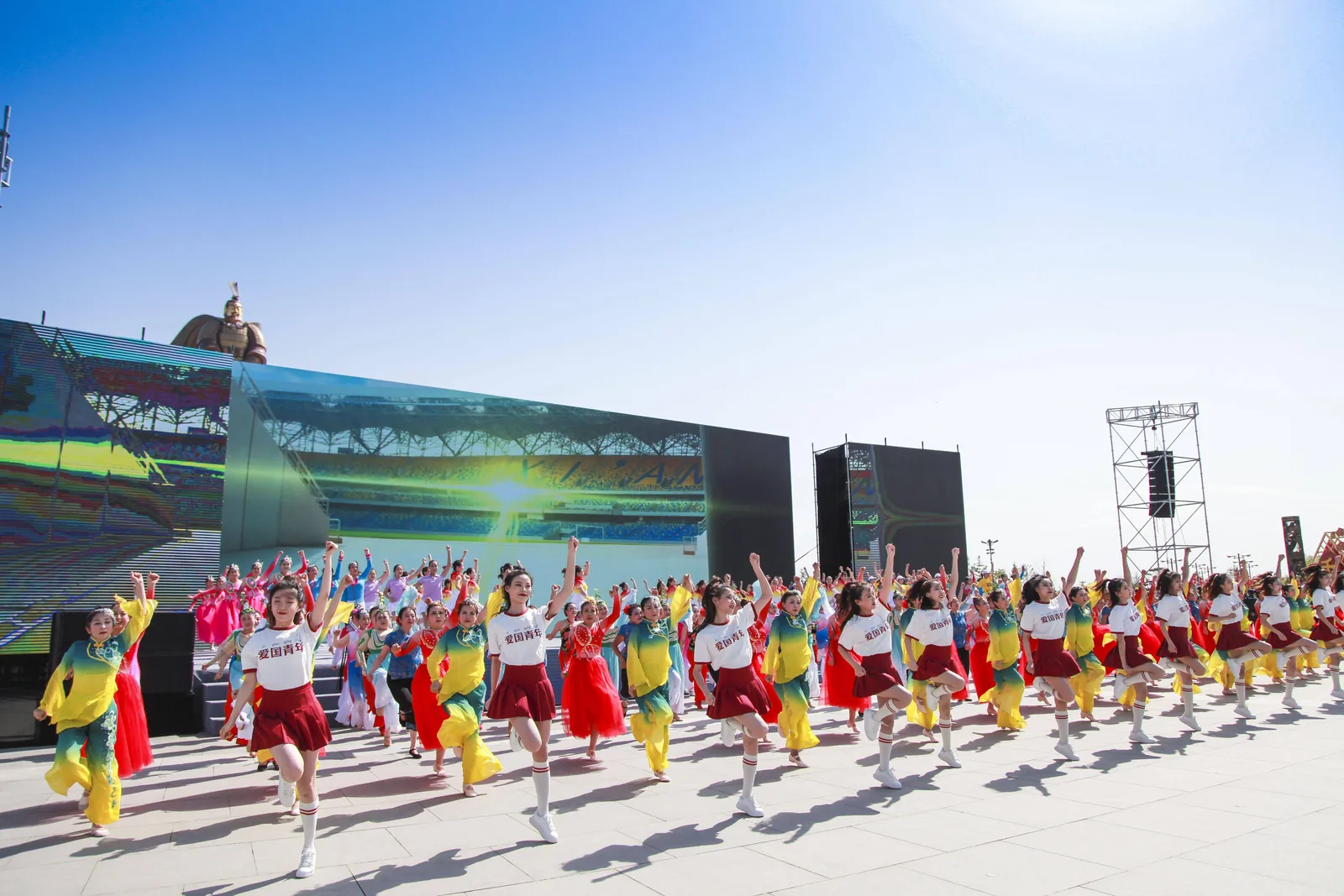
Indoor arenas host the big organized events — adherence is easier when dancing is social.
This may be one of guangchangwu’s most interesting characteristics.
Exercise only works when people actually do it.
The 2026 RCT reported 87% adherence to its 12-week intervention.
That does not prove that square dancing has better adherence than gyms, running, walking, or tai chi.
But it does demonstrate that a structured square-dance intervention can achieve high participation in a community older-adult population.
There is also evidence that square dancing has a social dimension beyond exercise.
A study of Chinese square dancers found associations between participation, social interaction, attitudes toward aging, and quality of life. In that study, 441 participants were included in the final analysis.
This is important because exercise adherence is not purely physiological.
People may continue an activity because:
- their friends are there;
- the routine is familiar;
- someone teaches the group;
- they enjoy the music;
- they have a regular place to go;
- they feel part of a community.
Those factors may be just as important as the exercise itself — and they are exactly what a group provides that a home workout does not.
What the Research Does Not Support
A good health article should spend as much time explaining what isn’t known as what is known.
“Square dancing reduces falls by 47%.”
Not established.
The large 2024 dance-for-falls systematic review found very low certainty of evidence and no significant effects on several functional outcomes.
“Square dancing cures depression.”
Not established.
Recent studies support improvements in depressive symptoms and wellbeing, but exercise should not be confused with treatment for clinical depression.
“Square dancing increases bone density for everyone.”
Not established.
There are positive findings in specific postmenopausal osteoporosis populations, but broader evidence does not show a consistent BMD benefit from dance.
“Square dancing prevents dementia.”
Not established.
There are plausible cognitive and social mechanisms, but current direct evidence is insufficient to make a dementia-prevention claim.
“Square dancing is the best exercise for older adults.”
There is no basis for such a universal ranking.
WHO recommends a combination of aerobic activity, strength training, and multicomponent activity emphasizing balance and strength for older adults.
The most appropriate exercise depends on the person’s goals, health, mobility, preferences, and ability to participate consistently.
The Risks Are Real Too
Calling something beneficial does not mean calling it risk-free.
Square dancing can involve repetitive stepping, turning, bending, squatting, weight transfer, and — in some routines — more vigorous movements.
In one reported survey of more than 400 square-dance participants in Xi’an, the overall reported sports-injury rate was 48.8%. The commonly reported affected areas were the lower back, knee, and ankle, at 29.8%, 19.2%, and 15.4%, respectively.
But this number needs context.
It came from a specific survey population and should not be interpreted as saying that 48.8% of all Chinese square dancers will be injured.
The survey also does not tell us that square dancing is inherently dangerous.
It tells us that injuries occur and that technique, workload, movement selection, footwear, surface, and individual health matter.
Common reasons for problems
Risk can increase when people:
- start too intensely;
- skip warm-up;
- suddenly add complicated movements;
- repeat high-impact movements for long periods;
- dance through pain;
- use unsuitable footwear;
- dance on an inappropriate surface;
- or ignore an existing musculoskeletal or cardiovascular problem.
The safest response is not “stop dancing.”
It is match the dance to the person.
Who Should Be More Cautious?
There is no universal list of people who “must never square dance.”
But people with significant cardiovascular disease, uncontrolled hypertension, acute injuries, severe dizziness or balance disorders, significant joint problems, or other conditions that limit exercise should discuss the appropriate level of activity with a healthcare professional.
The same applies to someone returning to exercise after surgery, hospitalization, or a significant injury.
For people with chronic conditions such as hypertension or diabetes, the relevant question is usually not:
“Can I ever square dance?”
It is:
“What intensity and type of movement are appropriate for me?”
That is a much more useful clinical question.
How to Dance for Health, Not Against It
The evidence does not support a single magic square-dance prescription.
But the WHO recommendations provide a useful framework.
Start with the amount you can tolerate
For older adults, WHO recommends:
- 150–300 minutes of moderate-intensity aerobic activity per week, or
- 75–150 minutes of vigorous-intensity activity, or an equivalent combination;
- muscle-strengthening activity on at least two days per week;
- multicomponent activity emphasizing balance and strength on three or more days per week.
You do not have to reach the full target on your first week.
WHO explicitly recommends starting with smaller amounts and gradually increasing activity according to functional ability. The step-by-step path on the learn page is built around the same idea.
Use the routine — not the label — to judge intensity
“Guangchangwu” is too broad a category to tell you how hard a particular routine is.
Ask:
- Am I breathing noticeably harder?
- Can I still speak?
- Am I recovering normally after the session?
- Are my joints comfortable?
- Does the next day feel normal?
If the answer to the last two questions is no, reduce the intensity or change the routine.
Choose low-impact movement when appropriate
If you have joint problems or are returning to exercise, start with routines that minimize:
- repeated jumping;
- deep squatting;
- aggressive twisting;
- rapid changes of direction;
- and high-impact landings.
There is no prize for choosing the hardest choreography.
Wear actual exercise shoes
A stable, well-fitting athletic shoe is generally a better choice than:
- slippers;
- loose sandals;
- high heels;
- or shoes with poor grip.
The exact shoe depends on the surface and activity.
Warm up and cool down
A few minutes of gradually increasing movement before the main session can help you transition into exercise.
Afterward, gradually reduce the intensity rather than stopping abruptly.
Pain is not a badge of achievement
Normal exertion is one thing.
Persistent or worsening joint pain, chest pain, unusual shortness of breath, fainting, severe dizziness, or other concerning symptoms are reasons to stop and seek appropriate medical attention.
How Does Guangchangwu Compare With Other Exercise?
There is no universal winner.
Different activities solve different problems.
| Activity | Main characteristics |
|---|---|
| Guangchangwu | Aerobic activity + coordination + music + group participation |
| Brisk walking | Simple, accessible aerobic exercise |
| Tai Chi | Balance, controlled movement, coordination, mind-body practice |
| Yoga | Flexibility, strength, balance, controlled movement |
| Pilates | Strength, trunk control, flexibility and movement control |
| Swimming | Aerobic exercise with low weight-bearing |
| Cycling | Aerobic exercise with relatively low joint impact |
| Running | Higher-intensity aerobic exercise for appropriate individuals |
WHO’s recommendations themselves illustrate why this comparison matters: older adults benefit from a combination of aerobic activity, strength training, and balance-oriented multicomponent activity rather than one magical exercise.
Guangchangwu can fit very naturally into that broader picture.
Its distinctive advantage may be less about physiological superiority and more about accessibility, enjoyment, repetition, and social participation.
But those advantages are individual.
Someone who dislikes dancing may adhere better to walking.
Someone who dislikes exercising alone may find a public dance group much easier to maintain.
The best exercise is often the one a person can perform safely and consistently.
Frequently Asked Questions
Is square dancing actually good exercise?
Yes.
Chinese square dancing can provide moderate-intensity physical activity, and recent randomized evidence in adults aged 60–79 found improvements in aerobic endurance, mobility, flexibility, blood pressure, mood, wellbeing, and quality of life after a 12-week program.
How many calories does square dancing burn?
It depends on the routine.
A standardized activity compendium lists Chinese square dance at approximately 5.5 METs for a moderate version and 7.3 METs for an aerobic version. A 60-kg person doing a 5.5-MET activity for one hour would have a rough gross energy expenditure of about 330 kcal, but individual results vary substantially.
Does square dancing prevent falls?
Not proven.
Some studies report improvements in balance or mobility measures, but a 2024 systematic review found very low-certainty evidence for dance as a fall-prevention intervention and no significant differences in several functional outcomes.
Is square dancing good for knee arthritis?
It depends on the severity of the condition and the movements involved.
Low-impact movement may be more appropriate than jumping, deep squatting, or rapid twisting, but people with significant or acute joint problems should get individualized medical or rehabilitation advice.
Can square dancing help depression?
Research suggests that it can improve depressive symptoms, anxiety, and wellbeing in some older adults. A 2025 network meta-analysis found positive effects for Chinese square dance compared with controls.
But square dancing should not be treated as a replacement for professional care for clinical depression.
Does square dancing prevent dementia?
There is currently insufficient direct evidence to make that claim.
Dancing involves memory, coordination, attention, and social interaction, but plausible mechanisms are not the same as evidence of dementia prevention.
Is square dancing safe for people with high blood pressure?
People with controlled hypertension may be able to participate in appropriate physical activity, but exercise intensity should be individualized.
The 2026 RCT found a modest reduction in blood pressure after a 12-week square-dance intervention, but this does not mean square dancing is a treatment for hypertension.
If blood pressure is uncontrolled or there is significant cardiovascular disease, medical advice should come first.
How often should I square dance?
There is no guangchangwu-specific magic number.
A practical target is to gradually work toward the WHO physical-activity recommendations while including strength and balance work as appropriate. For structuring first sessions, see how to start as a beginner.
The Bottom Line
The evidence for Chinese square dancing is better than the internet hype suggests — but also narrower than the hype suggests.
What can reasonably be said today?
First: Guangchangwu is a legitimate form of physical activity. WHO recognizes dancing as a form of physical activity, and recent direct research shows that structured square-dance programs can improve functional and psychological outcomes in older adults.
Second: The strongest direct evidence currently concerns outcomes such as aerobic endurance, physical function, flexibility, blood pressure, mood, wellbeing, and quality of life — not miracle disease prevention.
Third: Claims about preventing falls, increasing bone density for everyone, preventing dementia, or replacing treatment for depression go beyond what the current evidence can establish.
And perhaps the most interesting lesson is this:
Guangchangwu does not need to be the “best” exercise to be valuable.
If a person enjoys the music, knows the people in the group, can participate safely, and keeps coming back three or four times a week, the activity has achieved something that a theoretically perfect exercise performed twice and abandoned cannot.
That is not a claim that square dancing beats every other exercise.
It is a reminder that exercise effectiveness is partly biological — and partly behavioral.
For an introduction to the activity itself, start with How to Start Guangchangwu as a Beginner. For the music, playlists, speakers, and sound systems behind the activity, see Sounds of the Public Square: A Practical Music Guide to Guangchangwu.
Medical note
This article is an evidence review for general education. It is not medical advice or an individualized exercise prescription. Research on guangchangwu is still developing, and many studies have been conducted in specific older-adult populations in China. People with cardiovascular disease, uncontrolled hypertension, significant musculoskeletal problems, dizziness, recent surgery or injury, or other health conditions should discuss an appropriate exercise plan with a qualified healthcare professional.